Friday, November 09, 2012

莱佛士与法夸积怨- Raffles and Farquhar (3 of 6)

回顾新加坡独立以来的经济命脉,第一个转型是1980年代,走入新加坡版的“第二次工业革命”,淘汰密集工业,走入高增值的精密工程制造业,第二个转型是2000年代,走入大型会议与博弈为主导的服务业,两个IR应运而生。

有人说IR挂羊头卖狗肉,酒店消闲是辅助,主导是赌博,牺牲精神层面来换取金钱效益。政府以就业机会来阐明立场,简单一句话,国家机器运作需要金钱来润滑,巧妇难为无米之炊!

当年法夸出任新加坡第一任驻扎官期间,并没有得到莱佛士与EIC在金钱物资上的支援,发展新加坡的工作并不容易展开。常驻马六甲15年,法夸学会马来话,了解马来文化,善于跟苏丹和天猛公协调沟通。虽然莱佛士心目中的新加坡是个以传统道德持家的自由港,不允许鸦片、赌博与奴隶买卖,法夸为了筹集殖民地管理资金,不顾莱佛士定下的政策与规划蓝图,接受苏丹和天猛公的奴隶和债务奴役的交易,还允许华人社群合法赌博、马来社群合法斗鸡等。


(法夸William Farquhar)

(法夸允许人口贩卖,图为当时记录的在新加坡河口的人口贩卖活动,妇女被剥光衣服验身。Munshi Abdullah 的书中有详细记载。)

(马来人的斗鸡活动)

1822年10月10日,莱佛士从明古连回到新加坡,发觉市容一团糟,最明显的就是在大草场与新加坡河沿岸保留给政府行政机关的地段竟然出现民宅与货仓。莱佛士十分震怒,立刻设立了市区规划委员会(Town Planning Committee),委任Captain Davis, George Bonham(公务员) 和 A. L. Johnston(有威望的商人)为主要委员,征聘土地调查员Philip Jackson制作规划蓝图,法夸则被委任进行清除丛林、开辟道路、填平沼泽地的工作。

 在一份
1823年初的档案中(28 February 1823),秘书L. N. Hull 记录了市区规划的轮廓,这是经过修订后,1828年在伦敦发表的Jackson Plan (Plan of the Town of Singapore)。20世纪的新加坡市容还可见到当年的雏形。


(Plan of the Town of Singapore, Jackson Plan formerly published in London, 1828)


L. N. Hull's records:
Government: Raffles emphasised that the space bounded by the ancient fortification and the Singapore River was to be set aside as a cantonment, with land dedicated to troops, officers and the government, excluding all individuals with the exception of the Temenggong.

Merchants: He set aside land opposite the Singapore River for commercial and merchantile purposes。

European: The European town stretched from the seafront east of the cantonment to the southwest bank of the Singapore River. This area included accommodation for other merchants as well.

Chinese: Besides the southwest end of the European settlement along the Singapore River, the Chinese settlement centred around the existing Chinese Kampong was planned.

Malays: Emphasising accommodation for Bugis settlers and Arab merchants, the area around the residence of the Sultan known then as Kampong Glam was to be developed. The Malays were already residing around the Temmengong near Panglima Prang.

Indians: Tentatively, land for the Chuliahs were set aside up the Singapore River.

Raffles also gave instructions for establishing the Telok Ayer market, a church, and clear demarcation between races and professions.

莱佛士无法忍受法夸的管理方式,对法夸作出严厉的批评,两人的关系每况愈下,甚至转化到私人层面。根据蒙西阿都拉(Munshi Abdullah,莱佛士的马来秘书兼马来文老师)的记载,莱佛士和法夸都是大好人,两个大好人摆在同一个平面上,竟然会正正得负,或许是莱佛士的性格所使然。

The Hikayat Abdullah 《阿都拉传》:
As to his(Raffles) character, I noticed that he always looked thoughtful. He was very good at paying due respect to people in a friendly manner. He treated everyone with proper deference, giving to each his proper title when he spoke. Moreover, he was extremely tactful in ending a difficult conversation. He was solicitous of the feelings of others, and open-handed with the poor. He spoke in smiles. He took the most active interest in historical research. Whatever he found to do he adopted no half-measures, but saw it through to the finish.

It was Mr. Farquhar’s nature to be patient and tolerant of other people’s fault; and he treated both rich and poor alike, never looking on one person as more important that another. If a man however poor and lowly came to him with a complaint he would attend to him quickly and listen carefully, giving advice and direction until the man’s mind was set at rest, so that he returned home full of gratitude. Whenever he travelled about his carriage or on horseback the rich and the poor, and the children too, saluted him and he at once returned the compliment. He was ever generous to all the servants of Allah.

I heard people mentioning the names of Mr Raffles and Colonel Farquhar as very fine men. Many people testified to the reputations these men bore, to their fine characters. All the events I have described must surely be a lesson to men of wisdom and understanding, illustrating the references I have made to people of good character and profound learning and the stories I have told about them. I have done so in the hope that such people will emulate their conduct, their manners, their courtesy and their intelligence. As the wise man has said ‘it is better to die with a reputation for good than to live with a reputation for evil.’

Never once did he (Raffles) magnify his own importance or belittle that of others…Many are the men who have reached high estate, who are outstanding, very wealthy or very handsome to look at. But a nature so good at winning the affections of others and so noble as that of Mr. Raffles I have never found.


(The Hikayat Abdullah 1849)

(The Hikayat Abdullah的英译本,马六甲河上看马六甲市)

1823年1月,莱佛士写信给EIC加尔各答大总督,认为法夸与当地人的来往太过密切,马来裙带关系(包括法夸的夫人Nonio Clement, 法国与马来族混血儿)使到他“完全无法负起管理新加坡的重要责任”,这封信使法夸丢了官,孟加拉(威廉堡)文官哥罗福(John Crawfurd)走马上任。

蒙西阿都拉记载莱佛士在1823年6月9日离开新加坡时,泪眼盈眶,各族群聚集在码头为他送行。蒙西阿都拉也提到莱佛士叫他到船上道别,苏菲雅给了他25西班牙元,说是给他在马六甲的孩子们,使他感激涕零。蒙西阿都拉也记载了六个月后,法夸离开新加坡时,送行的有数千人,有些甚至哭了两昼夜。法夸在码头花了两个小时,跟他们一一握手。他们还乘船护送法夸出海,十里相送,直到法夸在地平线上消失为止。本地华人社群赠送给法夸的离任纪念礼物,包括银制餐桌饰盘(silver epergne)。

从法夸受爱戴的程度,难怪他回到苏格兰后,写了一份回忆录给EIC董事部,指明设立新加坡中途站是他的建议,新加坡也是在他的管理下日趋成熟的,董事部应该尊重他选择与开辟新加坡的激情。

EIC董事部向莱佛士求证,莱佛士认为那只是法夸一厢情愿的说法,实际上法夸只是奉他的命令行事,在必要时从旁协助(1825年1月25日):

“On the credit assumed by Lieutenant-Colonel Farquhar for having suggested the establishment of Singapore, [...] this is the first time I ever heard of the circumstance, and [...] on reference to the public records I find nothing to support it. [...] a regard to truth compels me to deny in broad terms that Colonel Farquhar ever suggested, or, to my knowledge, knew or stated anything with regard to the formation of a Settlement at Singapore, until I communicated to him the authority with which I was invested, to form a Settlement there. [I am only prepared to acknowledge] the assistance he rendered to me on the first establishment of the Settlement.”

1825年4月,法夸反驳莱佛士的说法,但并没有再提到建议在新加坡设立殖民地和开辟新加坡是他的功劳这回事。有鉴于此,同年11月,EIC董事部推翻法夸的论点,开辟新加坡的功绩归于莱佛士。

不过,EIC对莱佛士的小小新加坡似乎也不怎么在乎,EIC非但没有支付每年£500的退休金给莱佛士,还列出过去二十年来的财务清单,向被病魔缠身的莱佛士追讨包括1819年来往新加坡与明古连间的花费,连同利息,总欠款额为£22,272。莱佛士逝世一年后,他的妻子苏菲雅(Sophia)跟EIC达成协议,以£10,000结束这场宾主关系。

(EIC向莱佛士追讨的清单)
Tuesday, November 06, 2012

让梦想发光 - Raffles and Farquhar (2 of 6)

在拼经济拼GDP的今天,用“财迷心窍”来形容一般人的心态也许略显过火,但如果说许多人的一生都在累积金钱财富上拼搏而忽略了精神层次的意义,应该不以为过。

在新加坡华乐团担任音乐总监已有十年的叶聪说:“父母给了我最深刻的理念就是:人生最重要的不是金钱,不是房屋,不是汽车,而是本事。”(联合早报,2012年6月21日)

走上父亲郭宝昆戏剧之路的郭践红写道:“就是因为爸妈鼓励我们要有梦想、相信我们会追求梦想,因此才早早就给我们上一堂很重要的课——梦想必须有承担。过一个别人为你安排好的一生是不会有能力,也不可能想要追求梦想的。这样一堂课只能从挫折和失败中,经历挑战和考验才学习得到。”(联合早报,2012年6月24日)

为了驱逐殖民地政府,解放马来亚的理念而将青春奉献给马共的陈平在回忆录中写道:“I fought a liberation war. To ask whether I would do it again is idle talk. I was a yong man in an entirely different setting. But the realities and the lessons I learned from that time comprise a body of values I can share with the young who may wish to look beyond their palmtops and understand how history is shaped. I would like to be involved in a forum. It is the exchange of ideas that ultimately moves the world. The barter of views still exhilarates me. You can tell me I was wrong. You can tell me I failed. But I can tell you how it was and how I tried.”

当英国在世界舞台上势力渐渐凋零,在国内公民自由又一再被政治践踏之际,缅甸的民主斗士翁山淑枝第一次重回抚育她的牛津大学,她说:“今天是个很令人感动的一天,因为过去一直都在,它永远不会走开。但你可以从过去选择最好的来帮助你走向未来。”

或许他们话中的另一番含义是思索人生的内涵,才能在短促的生命中发热发光。


莱佛士


时光回流到莱佛士的年代,飞机轮船都还是梦想,远渡重洋还得靠季候风,名符其实的看天行事。莱佛士的父亲是船长,莱佛士在牙买加附近的船上出生。1795年,莱佛士14岁时进入伦敦的EIC当临时书记,负责远东的殖民活动。十年后(1805)他被派往槟榔屿(槟城),开始不平凡的东南亚生涯。1811年莱佛士受任为爪哇副总督,1818年明古连(Benkulen, Bencoolen)总督。统治期间,莱佛士实行一定程度的自治,废除奴隶贸易,修复一些当地古迹,以新的土地租赁体系来取代荷兰时期的强制农业计划等,为当地人作出一定的贡献。

在爪哇和明古连期间,莱佛士收集了许多马来手抄本书籍,包括被称为莱佛士珍藏手抄本第18号的《马来纪年》(Raffles 18 version of the Malay Annals,1612年编写,所知最古老的版本)。莱佛士对当地的古物民情作了一番研究后,撰写了《爪哇史》,还因此受册封为爵士。

(爪哇史The history of Java, 1817)

关于对新加坡的认识,英国船长Hamilton记录:“公元1703年我前往中国途中,访问柔佛。而他(Sultan Abdul Jalil)以非常和善的态度接待我,并且要把新加坡当礼物赠送给我。不过我告诉他,对个人我而言,这个岛没有什么用处,但对公司来说,却是开辟殖民地的好地方。它坐落在贸易中心,又有良好的河流和安全的海港辅佐,其所在位置很适宜,各种季候风把船舶吹入和吹出这些河流。”

莱佛士也许没看过Hamilton的记录,但他应该知道“古城新加坡”。根据《马来纪年》的记载,新加坡是个庞大的马来人贸易港,跟莱佛士日后选择新加坡作为贸易站有莫大的关系。莱佛士在写给远在英国家乡的朋友Sandheads的信中提到(1818年12月12日):“如果我给你的下一封信是从新加坡古城所在地寄出,千万不要感到意外。”

1819年1月底随同莱佛士一行人抵达新加坡的侦察号船长(“Investigator”, Captain John G.F. Crawfurd,他和第三任驻扎官同名但不同人)记述了当时谈话的内容:“这个地点就是新加坡极古老的城市和堡垒的所在地。新加坡的君主远在一千年前便对爪哇、苏门答腊及其邻近的岛屿,以及马来半岛的大部分地区发号施令。它以往的光辉并未残留人间,就连最细微的痕迹也不曾发现….这地方一度是那么伟大,那么强盛,如今却沦为一个小渔村。在我们到来之前,它在近代史上或地理上都寂寂无闻。史丹福爵士是在一部极古老的马来作品中发现有关新加坡的记载。”

(新加坡有天然屏障,可以遮风挡浪,是一个串通东西海路的避风港。Singapore Map 1820)

从种种迹象看来,莱佛士虽然没有到过新加坡,但参考了前人的经验,他已经认识新加坡,并认为新加坡是来往印度与中国之间一个优秀的中途站。如Wurtzburg所说:“莱佛士的典型作风是进行政治策划时,喜欢以历史背景作为行动的依据。”

法夸

十八世纪发生在千里之外的欧洲战争竟然改变了马来群岛的政局,造就了日后的新加坡,或许这是件匪夷所思的事,但世事就是这么难料。1795年拿破仑战争横扫欧洲,荷兰分身乏术,无法兼顾在东南亚的殖民地。1803年,29岁的法夸为英国从荷兰人手中接过马六甲的统治权,在1803年到1818年间担任马六甲的驻扎官,全权管理马六甲,深受当地人爱戴,尊称为马六甲王(Raja of Malacca)。

1818年,欧洲战事结束,根据欧洲和约条例的规定,荷兰人从英国人手中取回马六甲的统治权,法夸因此离开马六甲,到新加坡走马上任。当时大批侨民冒着荷兰人的铁手腕和海盗掠夺的危险,跟随法夸离开马六甲,来到新加坡。可见法夸长期驻扎在一个“外国人”的地方,没有功劳也有苦劳。

在马六甲任职期间,法夸家里饲养了多种动物,甚至连老虎都不放过。所谓养虎为患,法夸以为给老虎喝奶吃素就可以改变“虎性”,结果不然。江山易改,本性难移,这头老虎竟然把一名员工活活咬死!法夸惊吓之余,下令把吃斋的老虎给杀了。

在马六甲时,法夸也聘用当地华人用彩笔描绘马六甲一带动植物的自然生态,一切根据科学解剖法与几何比例,是19世纪初新加坡和马来亚半岛南部地区自然生态最完整的记录。1823年离开新加坡时,他随身带了这批画返回英国,交给英国皇家亚洲学会保管。1994年,新加坡商人吴玉钦(GK Goh)以大约300万新元标得整批画作,捐献给新加坡国家文物局,古画重投新加坡怀抱。

(自然生态:甘蜜Gambier)

(自然生态:犀鸟Hornbill)

Friday, November 02, 2012

是谁造就了莱佛士?- Raffles and Farquhar (1 of 6)

小时候住家靠近维多利亚剧院,剧院前有一个黑色的塑像,双手交叉在胸前,似乎俯视众生,又似乎望着远方。那时候的我每经过这里都喜欢依样葫芦,摆一个类似的post,其乐融融。转眼间黑色的莱佛士塑像依旧在(Stamford Raffles),我呢也许没剩多少年,周围童稚的笑声早已不是我的了。

现在的新加坡河口、维多利亚剧院前都矗立起莱佛士的塑像;以莱佛士命名的地标、医疗中心、学校等比比皆是,如Raffles Hotel, Raffles Institution, Raffles Girl School, Raffles Hospital, Raffles Medical Group, Raffles City, Stamford Road, Bencoolen Street等。

与莱佛士同期在新加坡出入过的另一个英国人是法夸(William Farquhar)。小坡陈桂兰街附近曾经有一条短短的法夸街(Farquhar Street),1980年代屋子铲平发展地铁后已经在地图上消失。新加坡中央医院虽然建在法夸山上(Mt. Farquhar),一般老人家也许还记得中央医院的俗名叫“四排埔”(Sepoy),不过没多少人知道法夸山。


(1980年代地图:图上方是今天的Bugis Junction前的North Bridge Road, 下方是Beach Road。Farquhar Street (not Farquhar Beach!) 在 陈桂兰街Tan Quee Lan St.旁。Bernard St.的Bernard是Farquhar的女婿。)

(1950年代的鸟瞰图,上方North Bridge Road,下方Beach Road, 左边陈桂兰街,右边梧槽路。中间Farquhar Street, Beach Lane和Bernard Street等都清晰可见。)

(Mt Farquhar,中央医院的立足点)

19世纪初,莱佛士(Stamford Raffles, 6 July 1781 - 5 July 1826)与法夸(William Farquhar, 26 February 1774 - 11 May 1839)都在新加坡居住过,服务过。莱佛士在1819-1823年间到过新加坡三次,分别是1819年1月29日-2月7日,1819年5月31日-6月28日,最长一次是 1922年10月10日 - 1823年6月9日,前后不及十个月,行色匆匆。

法夸则是新加坡第一任驻扎官(1819-1823),四年垦荒,与各族同胞打成一片,就任期间胸口还挨了一个发穷恶的马来人一刀,没有功劳也有苦劳。

漫游历史长河,回望近两百年前,两位“过客”在新加坡短暂居留,对现代新加坡都作出了贡献。至于孰轻孰重,是近年来的争议点。

为什么当年东印度公司(EIC)将开拓新加坡的伟绩归功于莱佛士,而不是当时深受本地人爱戴的法夸?结果代代相传,法夸逐渐在新加坡史上销声匿迹?

是因为莱佛士是英国人,法夸是苏格兰人,而EIC是一家获得英女王伊丽莎白一世皇家特许状的半官方英国公司,在两者的取舍间必须照顾本地公民(英国人)的利益?

是因为莱佛士是老板,法夸是下属,在工作场合里,一向来都是下属工作,老板缴功,所以EIC也遵循惯例?

是因为莱佛士作为一个成功的男人,背后有个得力的女人苏菲雅(Sophia Hull, Sophia Raffles),努力为亡夫写传记(1830年出版),甚至修改文件,独揽江山?

莱佛士与法夸两人之间的恩恩怨怨,都已经记录在许多文献上,我们不妨以现代的眼光来重温两百年前的一段“宫廷”之争。

“三英”与先驱人物

Ernest Chew的《Pioneers of Early Colonial Singapore 1819-1850》和Turnbull的《A history of modern Singapore 1819-2005》(2003年由许通美教授负责提呈给国际海事法庭申请白礁主权的文件也引用此书),指出当年的“三英”:莱佛士(1819-1923), 法夸(1819-1823)和哥罗福(John Crawfurd,1823-1826)都为新加坡日后的繁荣奠下稳固的基石。莱佛士的雄心与远见促成了1819年1月29日登陆新加坡,于2月6日与东姑隆签订“友好联盟条约”,设立贸易站,打下英国与荷兰在东南亚争锋的基础;法夸的精力与勇气,落实了商务、卫生、防范罪案与粮食供应方案;哥罗福在1824年8月2日签下的Anglo-Malay Treaty,正式“收购”了新加坡。

(Stamford Raffles)

(William Farquhar)

(John Crawfurd)

除了“莱法哥”三英之外,从马六甲、廖内群岛与世界各地前来的先驱人物,后来大量的中国与印度移民等都成就了新加坡,因此新加坡是属于人民的新加坡,新加坡造就了莱佛士,而不是莱佛士个人开拓新加坡。


(上图:福建街,下图:Keppel Harbour。他们是无名氏,他们也缔造了新加坡现代史。c.1800s)

(在历史长河里他们影像模糊,也不会被人记起,但他们也缔造了新加坡现代史。历史应该如何为小人物正名?c2000s)

有些史学家则认为应该为哥罗福正名,因为莱佛士只是立下租约,以每年8000西班牙元租下新加坡河岸附近地区(苏丹5000元,天猛公3000元),真正开辟新加坡的是哥罗福谈判签下的那张“永久地契”,使英国拥有新加坡本土与方圆十里的岛屿的拥有权,苏丹与天猛公则在新加坡本土分配到一些地段;如果他们选择永久性离开,还可得到一笔补偿(苏丹20,000元,天猛公15,000元)。这份Anglo-Malay Treaty和5个月前在伦敦签下的Anglo-Dutch Treaty of London(17 Mar 1824),一次过将新加坡的主权归纳给英国。

不过对新加坡而言,哥罗福只是第二任驻扎官,在他之前的头四年还有莱佛士和法夸租用与管理新加坡,已经扎了根,因此就如历代皇朝一样,哥罗福只能当个发扬光大的老三,好戏是开山鼻祖之争。

Friday, October 26, 2012

Stamford Raffles and Borobudur婆罗浮屠

My NMS (National Museum of Singapore) mentor Loy Siang Teng (黎上增) shared his thought of Borobudur after a recent visit to the ancient site. In his words, "想想一千多年前,爪哇先祖就已经有这个能耐建造如此辉煌的神殿,感叹。"

In 1811, after the invasion and annexation of the Kingdom of Holland by France during Napoleon's war, Raffles mounted a military expedition against the Dutch and French in Java. During his governorship as the Lieutenant-Governor, Raffles introduced partial self-government, stopped the slave trade, became an early opponent of the Opium trade by placing strict import control, much to the dismay of East India Co. in Calcutta. One of his legacy at that time was the discovery of Borobudur although this was only briefly mentioned in "History of Java" which Raffles completed in 1817. The book describes the history of the Java island since ancient days. Raffles is credited for the discovery of Borobudur.


(Outline drawing of Borobudur during Raffles time)

(Portrait of Stamford Raffles kept in National Portrait Gallery, London. A duplicated copy is shown in the National Museum of Singapore. Do note the Buddha artefacts on his table.)

In 1815, Raffles received order to leave for England after Java was returned to the Netherlands under the terms of the Anglo-Dutch Treaty of 1814. He sailed to England in early 1816 and en route St. Helena, visited Napoleon who was in exile on the island. 

Raffles was appointed as the Governor-General of Bencoolen (now Bengkulu) on 15 October 1817. This staged his return to South East Asia and his subsequent venture into establishing Singapore as a trading port in 1819.

Raffles' discovery of Borobudur convinced him of the existence of a great Hindu-Buddhist religion and civilisation in Java prior to the advent of Islam. Raffles’ emphasis on the Hindu-Buddhist legacy led on to extensive researches in appreciating the Malay Archipelago and later became a hit in Dutch academic circles. Raffles described, "The antiquities of Java have not, till lately, excited much notice; nor have they yet been sufficiently explored. The pursuits of commerce have been too exclusive to allow there being much interest in the subject."


(Raffles, "The antiquities of Java have not, till lately, excited much notice; nor have they yet been sufficiently explored. The pursuits of commerce have been too exclusive to allow there being much interest in the subject." Loy Siang Teng, 2012)

In many ways, Borobudur is a wonder of architectural design, of spiritual experience, and of the long-lost Buddhist culture in Java. Borobudur deserves to be a monument of mankind. Raffles wrote, "In the whole course of my life I have never met with such a stupendous and finished specimen of human labour, and of the science and taste of ages long since forgot."

The great discovery began with native Indonesians who told Raffles about rumours of ancient sculptures in the hills around Megelang. According to the description at the monument site, Raffles first discovered the Borobudur temple in 1812 where the temple was covered with bushes in a very bad condition. However, many other records stated otherwise that it was in 1814, Raffles sent one of his army engineers, H.C. Cornelius to search if the legends were real. The search party found a large hill which in fact was the Borobudur monument covered in lava. In order to arrest the decay that was threatening the monument, Raffles started the first European conservation project in Java. Cornelius worked laboriously for six weeks with the support of two hundred men and managed to clear most of the fallen trees, trash and soil from the Buddhist monuments. The British and after them the Dutch colonists (from 1816) did not have the experience to restore the monument so it was left uncovered for around 70 years. However, the clearing effort by Cornelius was so extensive that it eased the work of subsequent Dutch archaeologists 70 years later.


(Effort from all wards contributed to the restoration of Borobudur. Loy Siang Teng, 2012)

In 1885, J. W. Ijzerman, a Dutch architect involved in a restoration project, walked along the high processional path that surrounded the base of Borobudur. He noticed that the molding of the wall continued underneath a crack that he saw in the floor. This meant that all these stones must have been added at a time when part of the building was already finished.

Ijzerman called for a section of the path to be removed. When sixteen layers of stone had been pulled away, Ijzerman discovered another tier of panels quite unlike those of the upper galleries. These were portrayals of hellish tortures mixed with scenes of sweet pleasure. In all, one hundred sixty panels are uncovered. A few scenes had been left unfinished, with instructions to the stone carver inscribed in Sanskrit, and the style of lettering was so distinctive that it could be dated specifically to the middle of the 9th century. Experts concluded that Borobudur must have been built by the Sailendra kings (夏连特拉王国, 信奉金刚乘佛教) who ruled in Central Java at that time.

Many of the stones were removed by local villagers to build their houses, and statues were removed to decorate gardens. Even the Dutch removed some of the items as souvenirs and even presenting them to foreign governments as gifts, including to the king of Siam in 1896. Many of these items were never returned and are still displayed in museums around the world.

Restoration was continued by a Dutch engineer, Theodor Van Erp between 1907 and 1911. He managed to restore the lower levels and the upper terraces and the very top stupa though the base was unstable and at further risk from earthquakes.


(Stupas at the top of Borobudur. Loy Siang Teng, 2012 )

In 1960 the United Nations declared Borobudur the eighth wonder. In 1968, the Indonesian government and the United Nations, working through UNESCO, launch the "Save Borobudur" campaign. Over the next fifteen years, twenty million dollars are raised to support the complete dismantling and reconstruction of the lower terraces of the monument – stone by stone. Professionals from twenty-seven countries join their Indonesian counterparts to carry out the restoration project.

IBM Indonesia documented over 1,300,000 stones. Each stone was removed, restored, tagged and returned to it's original position. Many of the broken stones around the monument were analysed and a computer program assisted them with placing them in the right location. Even sculptured heads of the Buddha statues were matched with the correct statues. From the work completed to restore the monument, experts estimated that the monument originally took around 30,000 stone cutters, 15,000 people assisting in carrying the stones and 80 years to complete the task.

Looking back, it was articulated that in year 1006, a massive earthquake struck western Java which caused the volcano Merapi to erupt, covering everything for a few km radius of the volcano with lava and volcanic ash, including Borobudur. The discovery of Borobudur started with the curiosity of Raffles after listening to the locals. Western civilisation somewhat broadened humans mind and led on to many 'wow' discoveries. I tend to believe that if Raffles did not order the search, someone would. Also legends come with a cause. They provide us with border-less imagination to venture into the unknown. 

In the words of Professor Soekmono, the Indonesian archaeologist who directed the Borobudur restoration project: "Borobudur has resumed its old historical role as a place of learning, dedication and training. We might even conclude that the builders of the monument hoped and planned for such continuity. An excellent training program, either for the pilgrim-devotee or for the field technician, is always based on a wish, a fervent wish, that the trainee will achieve what is projected. For the ardent Buddhist it is the Highest Wisdom that leads to the Ultimate salvation, and for the technician the highest degree of expertise that leads to the appropriate fulfillment of his duty. In both cases, Borobudur is the embodiment of such a deeply felt wish. It is a prayer in stone."

Friday, October 19, 2012

清明上河图

四十年来家国,
三千里地山河。
凤阁龙楼连霄汉,
玉树琼枝作烟萝。
几曾识干戈?

一旦归为臣虏,
沈腰潘鬓消磨。
最是仓皇辞庙日,
教坊犹奏别离歌。
垂泪对宫娥。

-- 李煜,《破阵子》

公元961年,南唐后主李煜在金陵嗣位,即位后对宋朝称臣纳贡,以求偏安。公元975年,宋军破金陵,他肉袒出降,沦为阶下囚,三年后宋太宗赐药毒毙。自此由宋太祖赵匡胤发动陈桥兵变,黄袍加身所建立的宋朝(北宋960-1127,南宋1127-1279),统领中国319年。

(北宋的版图)

(南宋的版图,失去了北方)

北宋吸取了唐朝宦官专权、藩镇割据,导致灭亡的教训,基本国策是重文轻武,削减武官的权力,加强中央集权。这个政策对宋朝影响深远,好处在于使北宋初期政治、经济等都比较安定,尤其是没有宦官专权、地方割据等祸事,即使帝王表现平平,也无损国家的繁荣安定;而弊端则是宋朝军事力量不足,连同南宋三百多年,整个历史重心都是战事的挫败和断送半壁江山,期间宋朝曾有短暂的和平,但这是朝廷通过献赠大量银两给外族“购买”得来的。

在长年战乱中,宋朝出现了一群英雄人物,如一生主张武力抗金的辛弃疾,被十二金牌诏令回朝的岳飞,无视高官厚禄、宁死不屈的文天祥等人。武侠小说更加传神,《水浒传》的一百零八条好汉在山东梁山水泊落户,都是因为世道炎凉,官逼民反;《射雕英雄传》的郭靖和黄蓉一憨一精,在《神雕侠侣》中战死在襄阳城。宋朝给人的整体观感就是人逢“乱世”,没有和平。

话说回来,北宋时代的儒学复兴和重视文化,增加科举取录的名额,使文人得到自由发展的空间,其中较著名的文人有王安石、范仲淹、苏轼、司马光、欧阳修、陆游等人,他们擅于写词,唐诗宋词成为日后中国古典文学艺术的瑰宝。

北宋的开封府有个包青天(包拯,包公),虽然在任只有一年余,但他敢于惩治权贵们的不法行为,坚决抑制开封府吏的骄横之势,并能够及时惩办无赖刁民。在这短短的时间内,把难治的京城开封府,治理得井井有条。包拯受到同期官员如欧阳修、司马光等人正面的评价,包公审案成为许多地方戏剧的经典。

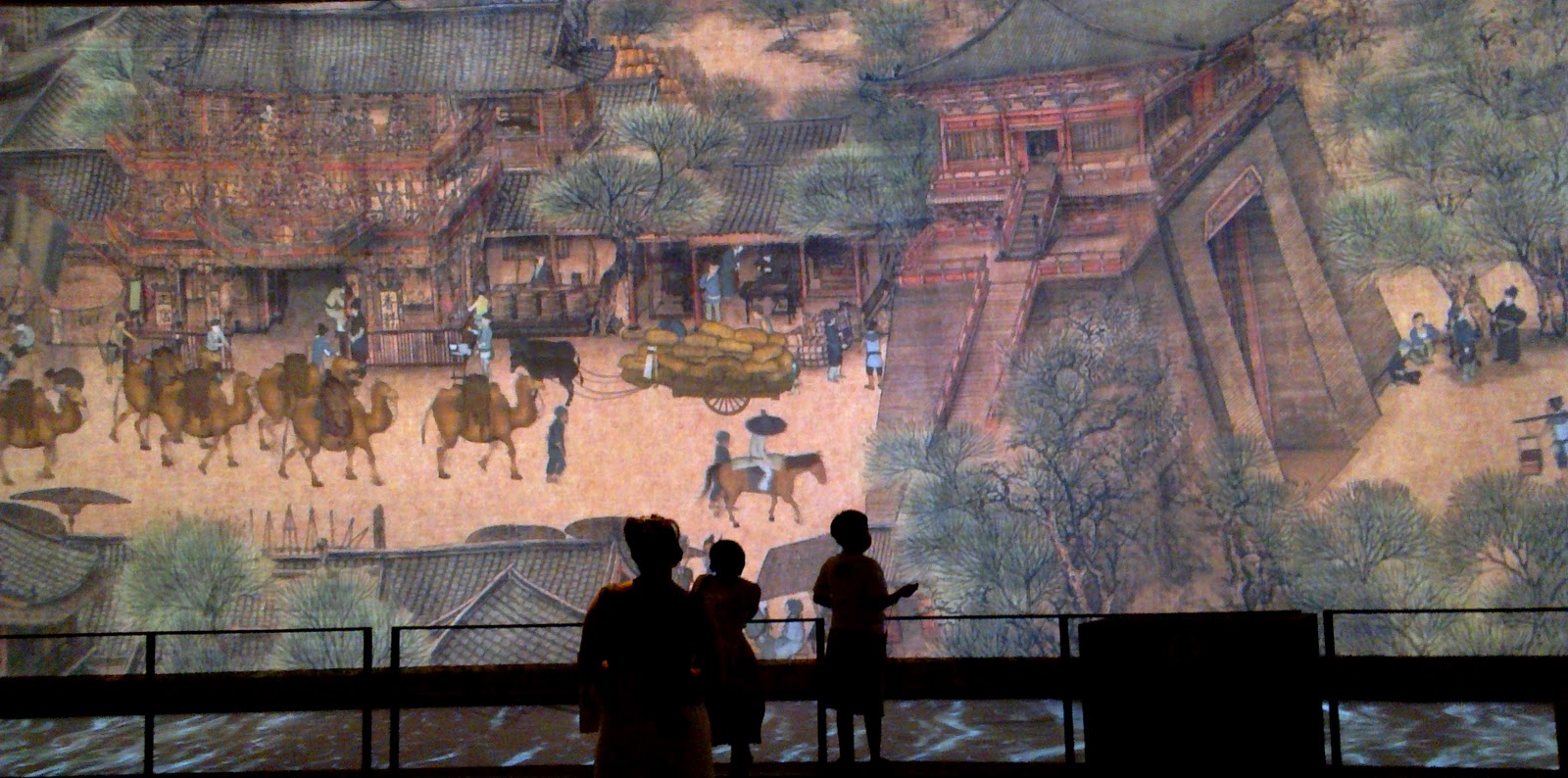
能够在“乱世”中见到宋朝鼎盛的一面,多亏《清明上河图》。动态的《清明上河图》是一条历史长河,融合了古典艺术与现代科技的结晶,巧妙地运用动画技巧,将古老的画卷呈现给现代社会。北宋汴梁(汴京、开封)阡陌郊野,小桥轻舟,白天和夜晚的市集各有各的繁华。所表现的栩栩如生的市井生活,成为2010年“上海世博会”中国馆的镇馆之宝,数十万门票预购一空,曾于上海世博会后在港、澳、台等地巡回展出。动态《清明上河图》在新加坡展出62天(2011年12月至2012年2月),是首次在大中华区外展览。


(动感《清明上河图》的昼与夜,Singapore Expo. 2012)

现场观看动态《清明上河图》,仿佛穿越过时空隧道,重新回到约九百年前汴梁城镇的生活和汴河两岸的绮丽风光。那一千多个栩栩如生的人物,在128米长、6.5米宽的屏幕上,把当时人民的生活展现在我们面前,使我们在感受可能是当时全世界最繁华的都市生活的同时,也依稀看到了今天现代生活的雏形。城巿的人际关系是人人互望一眼而又擦肩而过,既疏又亲,就如画卷里的官员对街头上的汉子瞥了一眼然后别头而去。红尘滾滚中回到现实中来,回望我们的城巿,我们会更享受自己的城市吗?

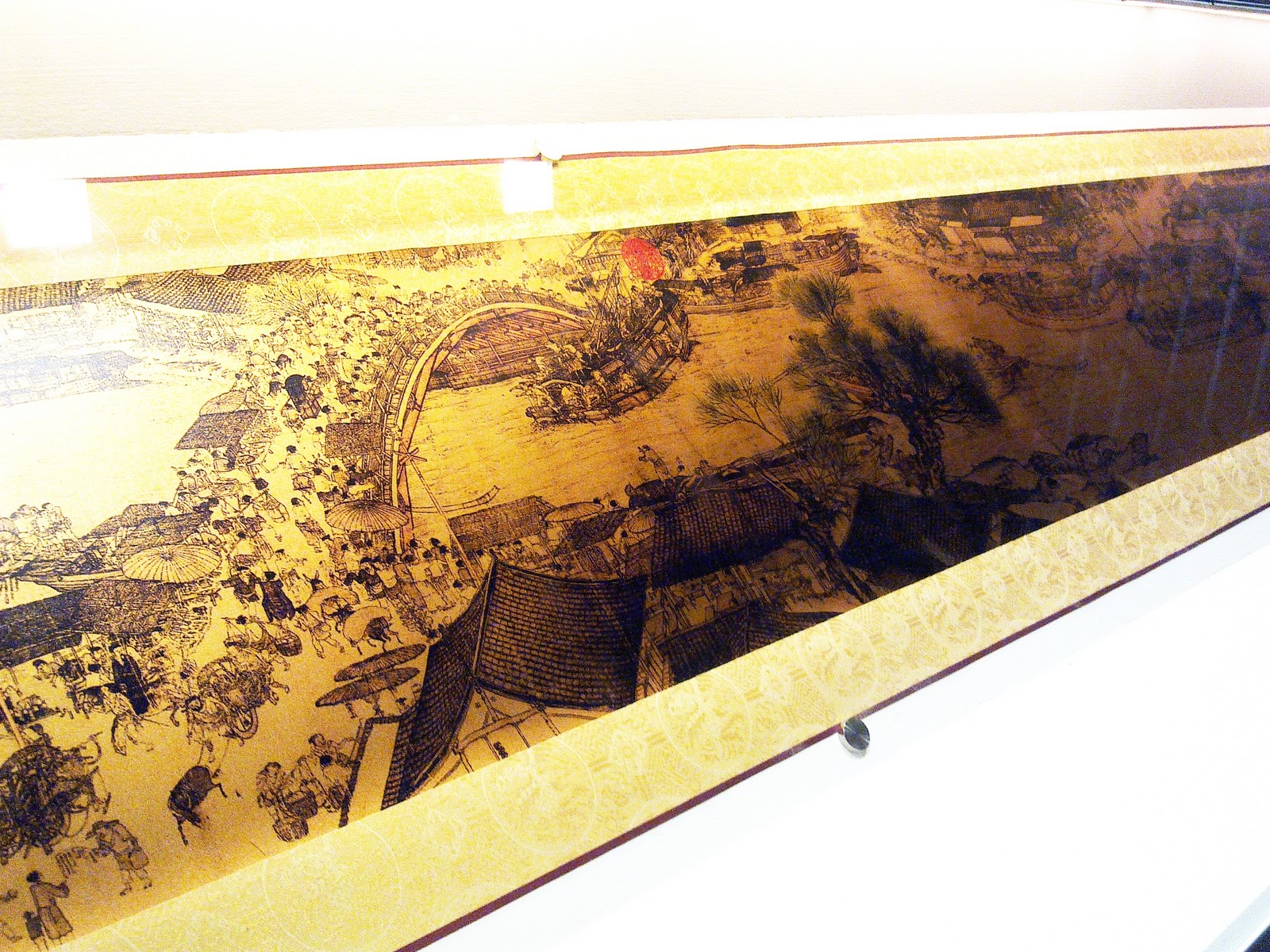
《清明上河图》的原画长528公分,高24.8公分,最早的版本为北宋画家张择端(1085-1145)所作,经历过四出宫、五入宫的命运,现藏北京故宫博物院。
(《清明上河图》的原画长528公分,高24.8公分,最早的版本为北宋画家张择端所作。)

《清明上河图》的画轴大致分成左、右两部份,右边描述乡间从容的生活步伐,从一条乡间小径逐渐拓宽、连接到市镇中的马路。画面左端则是描绘城市生活和经济活动,在画面左端进入城门后,各式各样的商业活动包含卖酒的、谷物市场、二手商品店、厨具店、弓箭店、灯笼店、乐器行、金饰行、布庄、画廊、香料店、中药店、餐馆等应有尽有。


(从乡野到市镇。2012)

除了商店和小吃店以外,画面中还包含许多客栈、寺庙、私人住宅、官邸,各种阶级和型态的房舍都有,有些还有前院和后院。画面中的人物使用各种不同型式的交通工具,有马车、驴子拉车、骆驼、轿子等。河川中央满是渔船和载人的游艇,河边则有一些苦力在拉着大船靠岸。


(汴河的昼与夜。2012)

画面中的虹桥是整幅画轴的焦点。画家在桥面上描绘出熙来攘往的人潮。一艘船正在离岸,从桥下穿越,由于桅杆不够低,威胁到桥身的安全,桥上和河边的群众正在卖力地朝船上的水手呼喊、并以手势表达。桥上行人来来往往,看过桥的人也在过桥。不经意间,自己也仿佛搭上这条介于历史与艺术间的桥樑,走入画图中了。


(虹桥是整幅画轴的焦点。2012)

画中的商业活动,让我们重新认识九百年前的中华历史。北宋全盛时,麻布产量是盛唐时期的两倍,两浙和川蜀地区成为丝织业中心。宋代制瓷窑户几乎遍布全国各地。定州(今属河北)定窑、汝州(今河南临汝)汝窑、颍昌府阳翟(今河南禹州)的钧瓷、饶州(今江西波阳)景德镇窑各有特色。随着雕版印刷业的兴盛,纸张的需求激增,促使民间造纸业迅速发展,造纸技术大幅度提高。此外,北宋已大量开采煤炭,作为冶金和民间日用燃料。火药、活字排版和指南针或许可称为宋代最伟大的科技发明。


(入城与出城。2012)


(城中的商业活动。2012)

(水井边人们围在一起谈天,名副其实的“市井小民”。2012)

北宋工商业发达,北宋后期出现了五十个超过十万户人家的大城市,内河航运和造船也十分发达。遍布各地的驿站网,除官府文书外,还可邮寄私人信件。北宋对外贸易也盛况空前,在海上,北自登州、密州,南到泉州、广州,总共开放了十二个官方对外通商港口,设立市舶司,管理对外贸易。从泉州、广州等港口出发的船只,将宋朝瓷器和丝绸等工业产品出口到西洋,换回香料、药材、以及象牙宝石等奢侈品。

1982年,新加坡的福康宁山挖出的宋朝的瓷器和钱币,是一个“大宋”远洋贸易的明证。2003年4月,在东马沙巴离岸400米外12米深的海域发现北宋古船,虽然船上珍贵的瓷器大部分已被当地的渔夫打捞去,但跟马来西亚政府合作的南海海事考古公司(Nanhai Marine Archaeology)还是打捞到三百余件宋朝瓷器,两百多公斤的陶瓷碎片和六十一个铜锣。这艘古船被命名为Tanjong Simbang,沉船年代于960-1127年间。


(宋朝的瓷器与纸张。2012)

宋朝也有文化的阴暗面,最糟糕的是北宋开始女人缠足,作为贡品的习俗。学者认为唐末五代十国以前中国女子是不缠足的。到南宋时,妇女缠足已比较多见,南宋末年“小脚”已成为妇女的通称。缠足的风俗是由北方传到南方的,大约是在宋室南迁的年代。 

苏东坡的《菩萨蛮》一词,可能是中国诗词史上咏叹缠足的第一首词:

涂香莫惜莲承步,长愁罗袜凌波去;只见舞回风,都无行处踪。
偷立宫样稳,并立双跌困;纤妙说应难,须从掌上看。

通过《清明上河图》,重温一堂历史课,但觉开封就像烟花,在昏暗的中世纪天空绽开,璀璨但短暂,京华梦一场。往下推溯,原来郑和下西洋,已是将近三百年后的大事了。

附记:
能够在新加坡花20元享受一顿《清明上河图》文化盛宴,应该谢谢主办商华鼎集团董事长李良义投资1200万元。他预期80万人参观,结果算盘打不响,只来了12万人,蒙受巨额亏损。或许李良义的市场调查做得不够,参观人数少了六到七倍。

若参考一些国家博物馆主办的世界级展览:古希腊的文明、叩问永生的古埃及、一夜间被火山灰湮灭的庞贝、以及跟《清明上河图》同时落幕的奥赛博物馆的印象派画作,访客都介于8万至14万之间。能够达到此数目字是因为多了许多外族访客,此外乐龄人士和学生是免费的,还有多天免费开放以吸引人潮。如果从投资的眼光来看艺术,国家博物馆是摆明亏钱的,就跟投资引入动感《清明上河图》一样。


如果以每名访客20元的收益来看《清明上河图》,肯定大出血。如果以访客人次来衡量宋代文化的冲击,12万人次是一个了不起的数目字,可以跟国家文物局主办的大型文化展览相抗衡。希望李良义先生和他的团队的心情会好过一些。